Are Touchless Kitchen Faucets Worth It? How Automatic Faucets Work, Pros and Cons
An automatic kitchen faucet is worth it if you cook often, handle raw meat or dough, and want to stop smearing the handle every time you rinse your hands. It is less compelling if you mostly fill pots, rarely cook, or do not want to deal with batteries or an under-sink power outlet. The rest of this guide explains how touchless kitchen faucets actually work, what they do well, where they fall short, and when a classic pull-down model is simply the smarter purchase.
How an Automatic Kitchen Faucet Works
Every touchless kitchen faucet is built around three parts that work together: a sensor, a control module, and a solenoid valve.
- The sensor sits on the spout or the base of the faucet. It detects a hand, a dish or a pot moving into its detection zone.
- The control module is a small box mounted under the sink. It reads the sensor signal and decides when to open or close the water.
- The solenoid valve is an electrically operated valve between your supply lines and the faucet. When the module sends current, it opens and water flows; when the signal stops, it closes.
The handle still matters. On most sensor kitchen faucets, the lever sets the water temperature and the flow volume, while the sensor only handles on and off. You choose warm water once with the handle, then wave to start and stop the flow as you work.
Infrared sensors vs. touch sensors
Two technologies are often lumped together under the “touchless” label, but they behave differently:
- Infrared (motion) sensors emit an invisible beam and react when something reflects it back. This is true touchless operation: you never contact the faucet. The trade-off is the detection zone. If it is too wide, the faucet can trigger when you reach past it; if it is too narrow, you have to aim your hands.
- Capacitive touch sensors react when your skin touches any part of the spout or body, the same way a phone screen does. You still make contact, but with the back of a wrist or forearm instead of gripping a handle. Some faucets combine both modes.
If hygiene is your main goal, look for an infrared model. If you mostly want convenience and fewer accidental activations, a touch-activated design can feel more predictable.
Power: Battery vs. AC Adapter
Because the solenoid valve needs electricity, every automatic faucet for the kitchen has a power source. There are two common setups.
| Power source | Advantages | Drawbacks |
|---|---|---|
| Battery pack | No outlet needed under the sink; simpler installation; works during a power outage as long as the batteries hold charge | Batteries must be replaced periodically; performance can become erratic as they run low |
| AC adapter (plug-in) | No batteries to replace; consistent power | Requires a grounded outlet in the sink cabinet; the sensor stops working during a power cut unless there is a battery backup |
Whatever the power source, check that the faucet has a manual mode. A good sensor kitchen faucet lets you run water with the handle alone, so a dead battery or a power outage never leaves you without a working sink.
The Real Benefits of a Touchless Kitchen Faucet
Cleaner hands, cleaner handle
This is the main reason people switch. When your hands are covered in raw chicken juice, egg, flour or grease, you can start the water without touching anything. That keeps residue off the handle and reduces the chance of transferring it to the next person who uses the sink.
Less water left running
With a manual faucet, it is easy to leave the tap running while you scrub a pan or reach for a towel. A sensor shuts the flow off as soon as your hands or the dish leave the detection zone. How much water that saves depends entirely on your habits, but for anyone who tends to let the tap run, the automatic shut-off is a practical way to waste less.
Convenience when your hands are full
Carrying a pot to the sink, holding a cutting board, rinsing produce in a colander: a touchless faucet starts the flow without you having to free a hand. Combined with a pull-down sprayer, it becomes one of the most useful upgrades in a busy kitchen.
Easier for kids and anyone with limited grip
Children who cannot reach or turn a stiff handle, and adults with arthritis or reduced hand strength, often find a wave or a light tap easier than a lever. Keep in mind that the temperature is still set by the handle, so it is worth leaving it at a moderate position in a household with young children.
The Drawbacks You Should Know Before Buying
- More components that can fail. A classic faucet has a cartridge and not much else. An automatic faucet adds a sensor, wiring, a control box and a solenoid. More parts means more potential points of failure over the years.
- Accidental activation. Infrared sensors can trigger when you lean over the sink, wipe the counter or set a dish down nearby. Most people adapt, but some never get used to it.
- Batteries and power. You either replace batteries from time to time or need an outlet under the sink. Neither is difficult, but both are ongoing considerations a manual faucet does not have.
- Filling pots takes patience. If you fill large stockpots often, you may have to hold the pot in the sensor zone or switch to manual mode. Some faucets handle this better than others.
Installation: What Changes Compared With a Standard Faucet
The faucet itself mounts like any single-hole kitchen faucet. The difference is what goes under the sink:
- Check your sink holes. Most touchless models are single-hole designs. If your sink has extra holes, you may need a deck plate to cover them.
- Plan space for the control box. The module and solenoid usually attach to the cabinet wall. Make sure they will not sit where cleaning supplies, a trash bin or a garbage disposal will knock them.
- Sort out power first. For a plug-in model, confirm there is a suitable outlet in the cabinet. For a battery model, place the battery box where you can reach it easily later.
- Connect the supply lines to the hot and cold shut-off valves, then connect the outlet hose from the solenoid to the faucet.
- Test both modes before closing the cabinet: sensor activation, manual handle operation, and the pull-down sprayer if your model has one. Check every connection for drips.
Anyone comfortable replacing a standard kitchen faucet can usually handle a battery-powered model. If you need a new electrical outlet under the sink, that part is a job for a licensed electrician.
Touchless or Classic Pull-Down: Which Should You Buy?
A sensor is a feature, not an upgrade in every situation. Here is a simple way to decide.
Choose a touchless kitchen faucet if:
- You cook from scratch often and handle raw ingredients daily.
- Hygiene at the sink is a priority, for example with young children or someone with a weakened immune system at home.
- You tend to leave the water running and want a faucet that shuts itself off.
- You are comfortable with replacing batteries or already have an outlet under the sink.
Choose a classic pull-down faucet if:
- You want the simplest, most low-maintenance option with no electronics.
- You often fill large pots and prefer precise manual control of the flow.
- Your kitchen sees light use and the hygiene benefit would rarely come into play.
- You want the widest choice of finishes and spout styles.
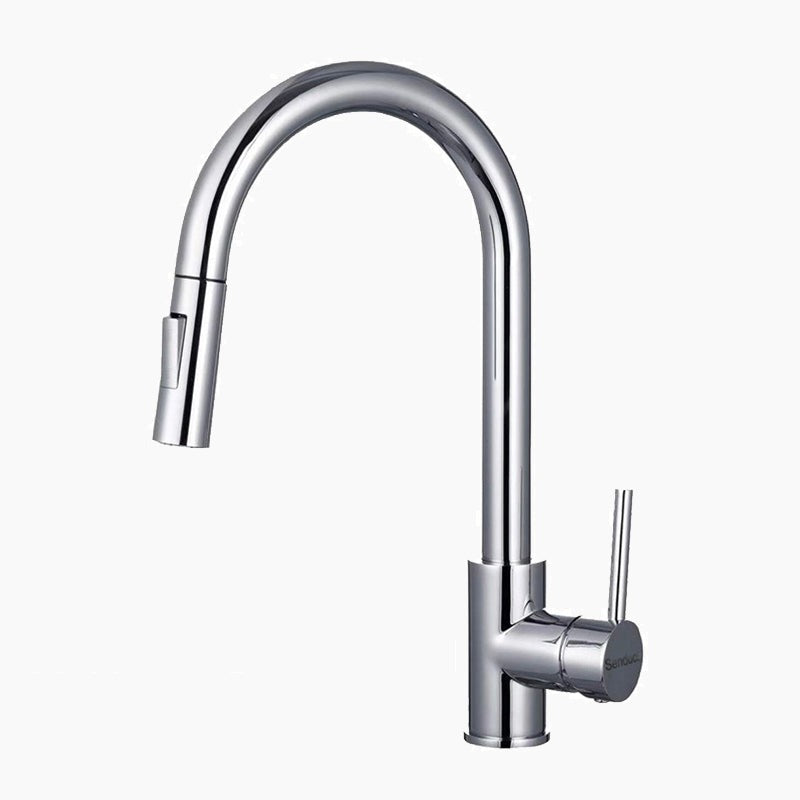
For many households, a well-made pull-down faucet with a high-arc spout covers most daily needs: plenty of clearance for large pots, a sprayer that reaches every corner of the sink, and a single lever that is easy to nudge with a wrist. The Modern Chrome High-Arc Pull-Down Kitchen Faucet is a good example of that no-electronics approach, and our full range of pull-down kitchen faucets offers the same layout in several finishes.
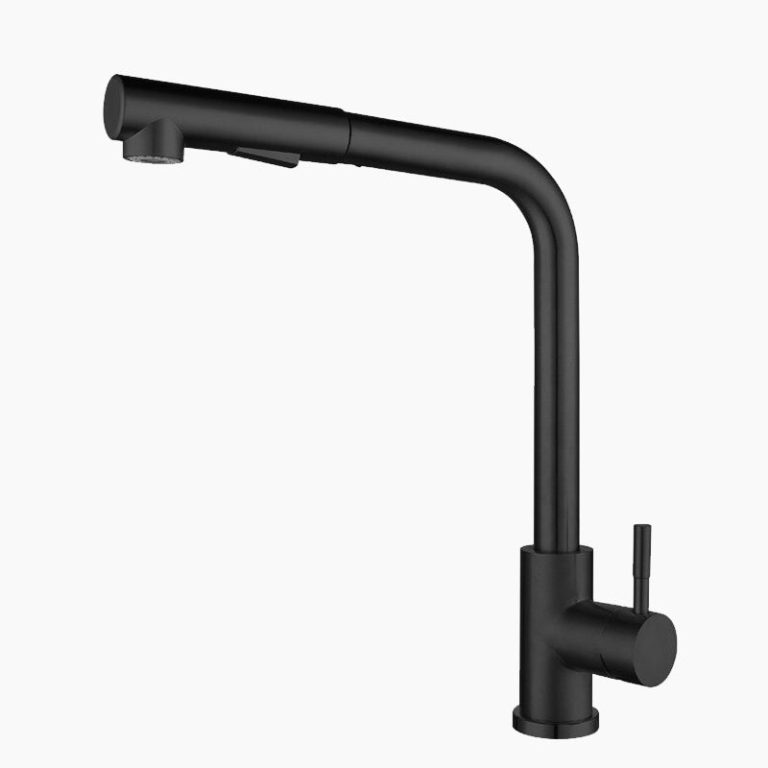
If you have decided you want hands-free operation, start with our touchless kitchen faucet collection, which includes the Matte Black Sensor Pull-Down Kitchen Faucet: sensor activation for touchless use, plus a high-arc spout and pull-down sprayer for everyday prep. And if you want the same hygiene benefit in the bathroom, take a look at our touchless bathroom faucets.
Tips for Living With an Automatic Faucet
- Set the temperature once. Leave the handle at your preferred position so the sensor always delivers water at the temperature you expect.
- Learn the detection zone. Spend a few minutes testing where the sensor reacts. Knowing its range quickly cuts down on accidental activations.
- Keep the sensor window clean. Mineral spots or grime can affect detection, so wipe it gently with a damp cloth and avoid abrasive pads.
- Keep spare batteries on hand if your model runs on batteries, and note the type the manufacturer specifies.
- Use manual mode for big jobs. Filling a stockpot or cleaning the sink basin is often easier with the handle.
Frequently Asked Questions
Do touchless kitchen faucets work without electricity?
The sensor needs power, so it will not respond during a power outage or when batteries are depleted. Most models include a manual mode, however, which lets you run water with the handle as you would with a standard faucet. Check for this feature before buying.
Can I control the water temperature on an automatic kitchen faucet?
Yes. On most models, the handle sets the temperature and flow, and the sensor simply turns the water on and off. You adjust the handle once and the faucet delivers water at that setting every time it activates.
Is a sensor kitchen faucet hard to install?
It is only slightly more involved than a standard single-hole faucet. You mount the faucet, connect the supply lines, and install the control box and solenoid under the sink. Battery models need no outlet; plug-in models need a grounded outlet in the cabinet, which should be installed by an electrician if you do not already have one.
What is the difference between a touchless and a touch kitchen faucet?
A touchless faucet uses a motion sensor, usually infrared, and activates without any contact. A touch faucet uses a capacitive sensor and activates when you tap the spout or body. Touchless is better for hygiene; touch-activated models tend to trigger less often by accident.
Are automatic faucets for the kitchen better than pull-down faucets?
They are not mutually exclusive: many automatic models also have a pull-down sprayer. The real choice is between adding a sensor or keeping a fully manual faucet. If hygiene and convenience matter most, a sensor is worth it. If you value simplicity and minimal maintenance, a classic model from our kitchen faucets range is the safer choice.