Antique Brass Faucets: Finishes, Vintage Styles and How to Pair Them in a Kitchen or Bath
An antique brass faucet is a brass-colored faucet with a deliberately darkened, aged finish: warmer and deeper than shiny polished brass, softer than modern brushed gold, and lighter than oil-rubbed bronze. It is the go-to choice when you want a kitchen or bathroom to feel collected over time rather than freshly renovated. This guide explains how antique brass compares with the finishes it is often confused with, what “living finish” and patina really mean, how to care for an aged metal surface, and how vintage silhouettes such as cross handles and porcelain levers fit into farmhouse and traditional rooms.
What “antique brass” actually means
Brass is an alloy of copper and zinc. Fresh from the factory it is bright and yellow. Left exposed to air, water and hands, it slowly oxidizes and darkens, picking up brown and sometimes greenish tones in crevices. An antique brass finish recreates that aged look on purpose, so the faucet looks as if it has been in the house for decades on the day you install it.
Manufacturers get there in different ways. Some apply a chemical darkening treatment and then highlight the raised areas so the metal looks worn where hands would naturally touch it. Others use a sealed coating in a warm, muted brass tone that will not change color over time. The result can range from a honey-toned, slightly smoky gold to a deep brown-gold that sits close to bronze. That variation is normal: “antique brass” describes a look, not a single industry color standard, so two brands can mean noticeably different shades.
Antique brass vs. polished brass, brushed gold and bronze
These four finishes are often grouped together on a search page, but they create very different moods. Here is how they compare side by side.
| Finish | Look | Best suited to | Maintenance feel |
|---|---|---|---|
| Antique brass | Warm, darkened gold with depth and variation | Farmhouse, traditional, cottage, English-style kitchens | Forgiving; small marks blend into the aged surface |
| Polished brass | Bright, mirror-like yellow gold | Formal, classic or Hollywood Regency spaces | Shows fingerprints and water spots quickly |
| Brushed gold | Even, satin gold with fine linear texture | Modern, transitional and minimalist rooms | Hides spots well; color stays consistent |
| Antique or rubbed bronze | Dark brown, sometimes with copper highlights | Rustic, Tuscan, lodge and Craftsman interiors | Very forgiving; reads almost as a dark neutral |
Antique brass vs. polished brass
Polished brass is bright and reflective. It makes a statement, but it can feel dated or flashy in a relaxed kitchen. Antique brass keeps the same warmth while toning down the shine, which is why it pairs so easily with wood, stone and painted cabinetry.
Antique brass vs. brushed gold
Brushed gold is uniform and clean, with a satin texture and no aging effect. It belongs to contemporary design. If you like warm metal but want a sleek look, browse our gold faucets. If you want the faucet to look like it has a history, antique brass is the better fit. People searching for an “antique gold faucet” are usually describing antique brass: a gold tone with the brightness knocked back.
Antique brass vs. antique bronze
Antique bronze faucets lean brown rather than gold. They are excellent in rustic and lodge-style spaces, but they can look heavy next to light cabinets. Antique brass sits between the two worlds: warm enough to feel vintage, light enough to brighten a room.
Living finishes and patina: what to expect
A “living finish” is metal left without a protective lacquer, so it keeps changing as it ages. Unlacquered brass is the classic example. It starts bright, then gradually darkens and develops patina, especially around handles and wherever water sits.
Many antique brass faucets are not living finishes. The aged color is created at the factory and sealed, so the look you buy is the look you keep. Neither approach is better; they suit different personalities.
- Choose a living finish if you enjoy a surface that tells a story, do not mind uneven tones, and are happy to polish it back if it gets too dark.
- Choose a sealed antique finish if you want the vintage color without the evolution, and prefer cleaning to be quick and predictable.
Before buying, read the product description for words such as “unlacquered,” “living,” “sealed” or “coated.” If it is not stated, ask the seller so you know which behavior to expect.
How to care for an antique brass faucet
Aged finishes are forgiving, but the wrong cleaning product can damage them. A simple routine keeps them looking right.
- Wipe it dry after use. A soft microfiber cloth prevents mineral spots from building up, especially in hard-water areas.
- Clean with mild soap and warm water. Dish soap on a soft cloth is enough for daily grime and kitchen grease.
- Avoid abrasives and harsh chemicals. Scouring pads, powdered cleansers, bleach and strong acidic or ammonia-based sprays can strip or discolor a sealed antique finish.
- Do not use brass polish on a sealed finish. Polish is designed to remove oxidation, which on a factory-aged faucet means removing the look you paid for.
- Treat limescale gently. For stubborn spots, apply a diluted white vinegar solution for a short time, then rinse with clean water and dry. Test on a hidden area first.
On a true living finish you have more freedom: you can let the patina deepen naturally or polish selected areas back to bright brass. Always follow the care instructions supplied with your specific faucet.
Vintage faucet styles that define the look
Finish is only half the story. The shape of the spout and handles is what makes a faucet read as vintage rather than simply warm-toned. When you browse vintage-style faucets, these are the details to look for.
Cross handles
Four-spoke cross handles are the signature of early twentieth-century plumbing. Two separate handles, one for hot and one for cold, give a symmetrical, traditional look on a bathroom basin. Our antique brass basin faucet with cross handles combines that classic shape with an aged brass finish, which suits a pedestal sink or a painted vanity.
Porcelain and ceramic levers
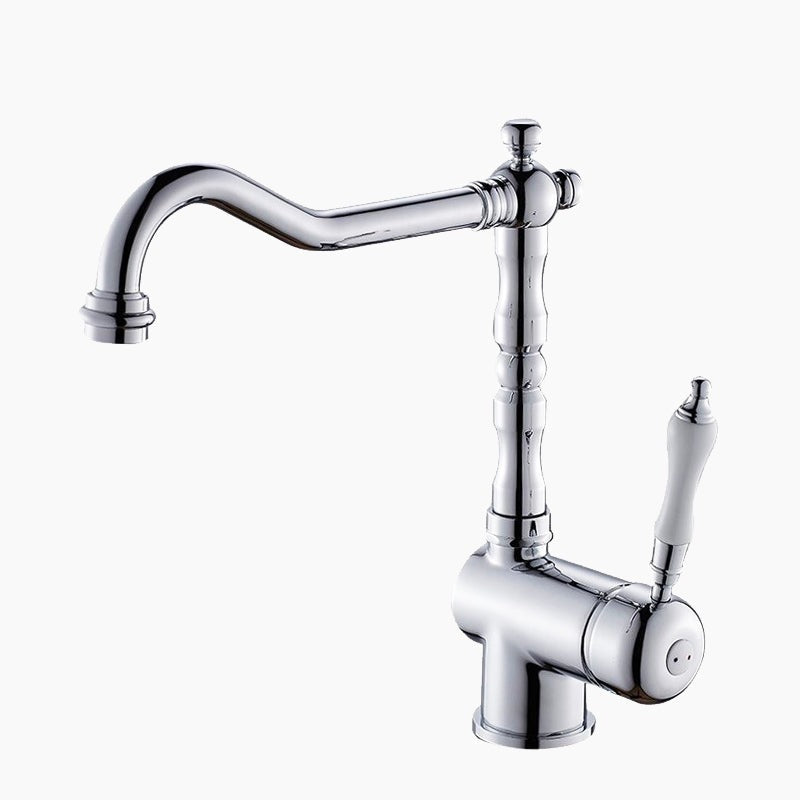
White porcelain-look levers recall old farmhouse sinks and bistro kitchens. They add a second material, which keeps a metal faucet from looking monotone, and they pair beautifully with white subway tile. The retro kitchen faucet with porcelain handle shows how far this detail goes: a fluted column, a gooseneck spout and a white single lever create a vintage feel even in polished chrome.
Gooseneck and high-arc spouts
Tall, curved spouts were common on older kitchen sinks, and they remain practical because they leave room to fill large pots. A gooseneck in an aged finish delivers period character while still offering modern conveniences such as a pull-down sprayer, as on the antique brass gooseneck pull-down kitchen faucet.
Pairing antique faucets in a kitchen
An antique brass kitchen faucet works best when it echoes something else in the room rather than standing alone. A few combinations that reliably look good:
- White or cream shaker cabinets with antique brass cup pulls and a matching faucet create a classic farmhouse kitchen.
- Deep green, navy or charcoal cabinetry makes warm metal glow; this is one of the most popular pairings for aged brass.
- Apron-front or fireclay sinks suit gooseneck and bridge-style antique kitchen faucets, both visually and in proportion.
- Butcher block, soapstone or honed marble counters complement the softness of an aged finish better than high-gloss surfaces.
You do not need every metal in the kitchen to match exactly. Antique brass mixes well with matte black hardware or iron light fixtures. A useful rule is to choose one dominant warm metal and one accent, and repeat each at least twice so the mix looks intentional.
Pairing antique faucets in a bathroom
Bathrooms are where vintage faucets shine, because the fixtures are often the main decorative element. Consider these pairings:
- Pedestal or console sinks with a cross-handle faucet give a period bathroom an authentic starting point.
- Checkerboard, hexagon or penny tile floors reinforce the traditional mood.
- Wood or painted vanities in muted colors let the warm metal stand out without competing.
- Coordinated accessories such as towel bars, mirror frames and cabinet knobs in a similar aged tone tie the room together.
Before choosing, check your sink’s hole configuration. Cross-handle basin faucets often need a specific setup, so confirm that the faucet matches the holes already drilled in your basin or countertop.
How to choose the right antique brass faucet
Once you have settled on the look, a few practical checks narrow down the options:
- Function first: in a kitchen, decide whether you need a pull-down sprayer and how much clearance you want under the spout.
- Handle style: a single lever is easier to operate with full hands; dual cross handles offer the most traditional look.
- Finish behavior: confirm whether the finish is sealed or living, as explained above.
- Material: a solid brass body is a sound base for any finish. Browse our brass faucets to compare aged and brushed tones side by side.
- Color matching: because shades vary between brands, look at product photos in natural light and, where possible, buy the faucet and matching accessories from the same range.
Frequently asked questions
Is antique brass the same as antique gold?
In practice, they describe very similar finishes. “Antique gold” is a marketing term for a warm gold tone with reduced shine and an aged quality, which is essentially what antique brass is. Compare photos rather than relying on the name, since shades vary between manufacturers.
Will an antique brass faucet change color over time?
It depends on the finish. A sealed antique brass finish is designed to keep its color. An unlacquered, living brass finish will continue to darken and develop patina with use. Check the product description or ask the seller to know which one you are buying.
Does antique brass go with stainless steel appliances?
Yes. Stainless steel reads as a neutral, and warm metals often look more interesting against it than chrome does. Repeat the brass tone in cabinet hardware or lighting so the faucet does not look like an isolated accent.
Can I get a vintage look without brass?
Absolutely. Shape matters as much as color. Chrome or matte black faucets with cross handles, porcelain levers or fluted bodies still read as vintage, which is why a retro chrome faucet can sit comfortably in a farmhouse kitchen.
How do I remove water spots from an aged finish?
Wipe with warm water and mild soap, then dry with a soft cloth. For mineral deposits, a brief application of diluted white vinegar followed by a thorough rinse usually works. Avoid abrasive pads and brass polish on sealed finishes.